
Another Storm Season You Didn't Prepare For Costs More Than You Think
Hurricane season doesn't wrap up neatly at the start of October. Late-season systems still spin up in the Gulf, and St. Petersburg homeowners who skip wind-prep on their garage door are betting their roof on it holding. That's not an exaggeration. When a garage door fails during high wind, the pressure that rushes into the garage has to go somewhere — usually up, taking roof decking and trusses with it. A door that buckles or blows in mid-storm isn't just a broken panel; it's often the start of a much larger insurance claim involving water damage to the attic, ceiling, and everything stored in the garage. Pushing this maintenance off another season means gambling that the next storm stays weak or misses you entirely. Given how often Tampa Bay sits in the cone, that's not a great bet.
Why the Garage Door Is Your Home's Weakest Wall
Every other exterior wall on your house is a solid, continuous structure. Your garage door is a large moving panel held in place by springs, tracks, rollers, and a motor — none of which were designed to be a structural wall. It's also usually the single biggest opening in the house, which means it catches more wind load than any window or door. Once wind pressure finds a weak point — a worn hinge, a track pulling loose, a panel already stressed by rust — it doesn't take much to force the door inward. And once it's gone, the wind pressure inside the garage pushes outward on the walls and upward on the roof. This is the exact mechanism that causes a lot of hurricane roof loss in Florida homes, and it's why wind-rated garage doors became a serious focus in coastal construction over the past couple of decades.
Signs Your Door Won't Hold Up Under Wind Load
Most garage doors don't fail without warning. The warning signs are just easy to ignore because the door still opens and closes fine day-to-day.
- Rust at the hinges, tracks, or bottom panel — salt air near the coast accelerates corrosion, and rusted metal loses strength exactly where you need it most.
- Visible gaps or play in the track — if you can wiggle the track away from the wall by hand, it's not anchored well enough to resist wind pressure.
- Panels that look slightly warped or swollen — Florida humidity and afternoon downpours cause wood and composite doors to swell and shift, which weakens the seams between panels.
- An opener that strains or reverses on its own — this often means the springs are losing tension, which affects how evenly the door holds under stress, including wind load.
- Weatherstripping that's cracked, flattened, or missing sections — beyond letting in water, gaps here are also where wind can get a foothold.
If any of these sound familiar, the door is already compromised before a storm even shows up.
What Actually Helps: Steps Worth Taking This Month
Not every fix here requires a full door replacement. Some of this is maintenance you can knock out in an afternoon; other parts are worth paying a technician to do right.
Check and tighten hardware
Hinges, track brackets, and roller brackets loosen over time from normal use and temperature swings. A quarter-inch of play doesn't sound like much until wind is pushing against the whole surface of the door. Go panel by panel and tighten what's loose.
Inspect springs for wear
Springs under tension are what keep the door balanced and rigid when it's closed. A spring that's rusted, stretched, or visibly uneven compared to its pair won't hold the door as tightly against wind pressure, even if it still technically works. Springs are also under enough tension that replacing them yourself is genuinely dangerous — this is one job worth leaving to a professional.
Reinforce or upgrade the door itself
If your current door predates wind-load bracing standards, a retrofit kit with horizontal struts can add real rigidity for a lower cost than full replacement, typically in the low hundreds of dollars for materials and labor. If the door is older, rusted, or already warped from moisture, replacing it with a wind-rated door is usually the better long-term move — newer doors are built with reinforced tracks and bracing specifically to handle Gulf Coast wind loads.
Address rust before it spreads
Salt air doesn't stop corroding metal just because you're a mile or two from the water. Sand and treat small rust spots on tracks and hinges now, before they weaken the hardware further.
Replace worn weatherstripping
Beyond keeping wind-driven rain out during a storm, fresh seals close up the small gaps that let wind get behind the door in the first place.
When to Call St. Petersburg Overhead Garage Door
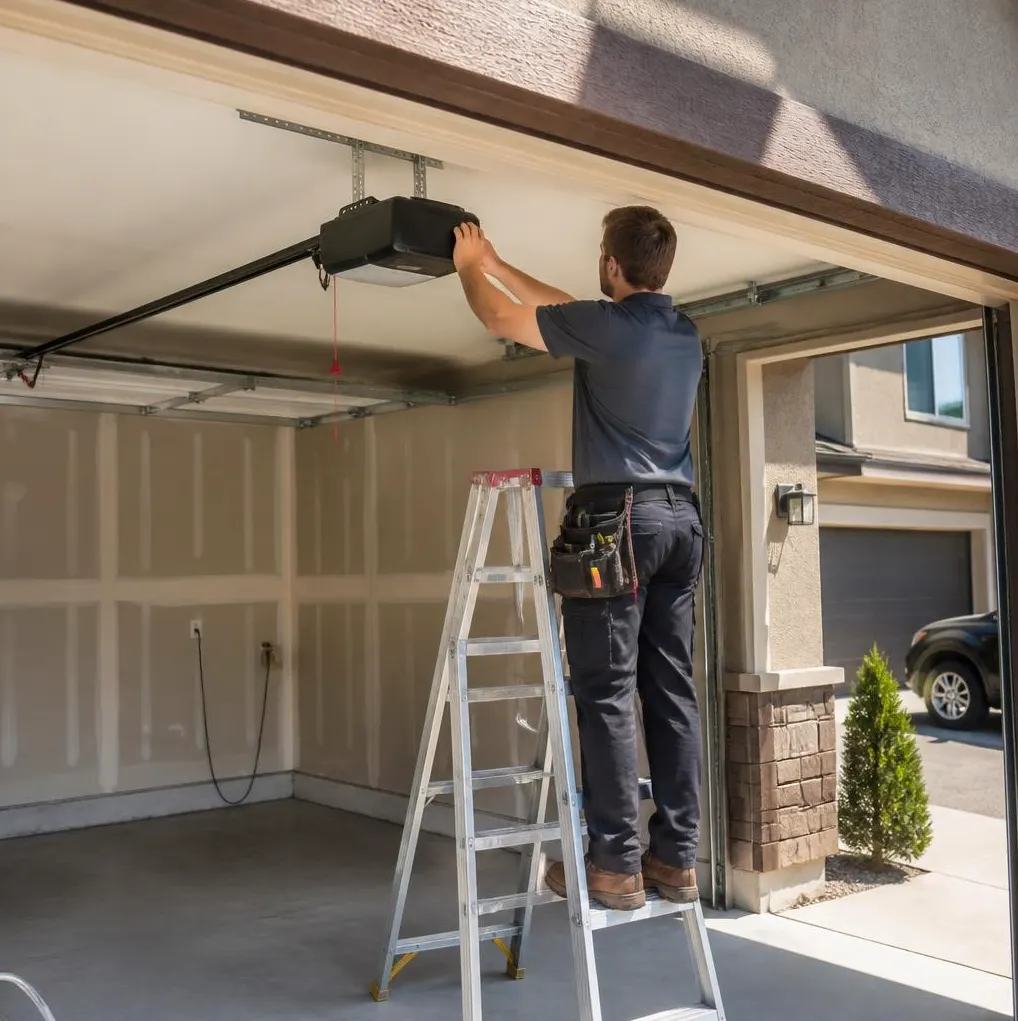
If you've spotted rust, loose track hardware, or a door that feels less solid than it used to, that's exactly the kind of thing worth having inspected before the next storm forecast, not during it. Our Garage Door Maintenance service covers the full hardware check — hinges, tracks, rollers, and spring tension — so you know whether you're dealing with a quick fix or something more serious. If your springs are worn or mismatched, our Spring Replacement service gets the door back to proper balance and tension safely, without you handling high-tension hardware yourself. And if your door is old enough that reinforcement doesn't make sense anymore, we'll walk you through wind-rated replacement options suited to coastal exposure.
Don't wait for a storm watch to find out your garage door is the weak point in your home. Call St. Petersburg Overhead Garage Door today and get it checked before the next system moves through St. Petersburg, FL.